
Coaching with a Dual Batter's Box
This is the day-to-day part. Your two boxes are set up and calibrated, and you have batters to get through.
The software picks the box for you
One station carries Left handedness and the other Right. When you select a batter whose profile has a handedness, the software makes the matching station active, and the capture uses that station’s plates.
There is no mode to choose. The switch happens when you select a batter, with four exceptions:
- The matching station is not ready. If one or more of its plates is not connected, the software leaves the previous station active and shows the mismatch warning described below. Reconnect the plate, then select the batter again.
- The batter’s handedness is blank. The station does not change. See Handedness that is not set .
- No batter is selected. The station does not change, and no warning is shown.
- A recording is in progress when you select the batter. The station does not change.
Where to look
Turn on Capture and the station button appears in the capture toolbar, between the activity selector and Manual Trigger. It is labeled with the active station’s name, so the toolbar tells you which box is live.
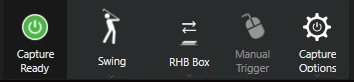
Check it before the first swing of each batter. It costs a second and it is the difference between a session of data and a session of data attached to the wrong box.
Switching by hand
Click the station button to open the station menu. The menu lists both stations and ticks the active one. To switch without opening the menu, press F7: it moves straight to the other station. The button’s tooltip reads Switch active station (F7).
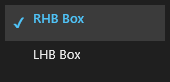
Use it when the active box is not the one you want for the next recording. A capture uses one station, so switching changes which station records. It does not record both at once.
A station with a plate missing shows a count such as 2 plates offline under its name in the menu. You cannot switch to it. The toolbar shows Cannot switch: ‘…’ is not ready. Check the Station indicator for details., with the station’s name between the quotes.
Check the button before you record. It carries the name of the station that is active, so you can see which box you are about to use without opening Settings.
A hand switch stays in place through recordings and through a restart of the software. It ends when you select a batter, because the station follows their handedness again, or when you switch again. Opening a recording made in the other box also makes that box’s station active.
When the software warns you
A yellow warning mark appears on the station button. Point at it and the tooltip reads Player handedness does not match station. The active station and the selected batter disagree.
Three causes, and they need different fixes:
- The batter’s handedness is set to the wrong side on their profile. Fix the profile.
- You switched by hand earlier and it stayed switched. Switch back, or select the batter again.
- The matching station was not ready when you selected the batter. The software stayed on the previous station. Check the batter’s box: in Settings, then Sensor Plates, the station’s tab shows how many of its plates are connected. Reconnect the plate, then select the batter again.
A blank handedness does not raise this warning. There is nothing to compare the station against, so the software stays quiet. The next section covers what happens instead.
Do not record through this warning unless you switched the station yourself and meant to. The plates record either way, and afterwards nothing in the data tells you the batter was in the other box.
Handedness that is not set
If a batter’s handedness is blank, the software leaves the active station alone. It picks no box for that batter, and it shows no warning. Whichever box was live stays live.
The recording is a separate matter. There, a blank handedness counts as right-handed. The capture screen says so under the handedness choices: “This athlete’s handedness is not set, so “Default” currently means right-handed. Set it in the student profile, or choose Right/Left here for this capture.”
So a blank profile can leave a batter in the box the batter before them used, with the swing recorded as right-handed. Set handedness on the profile when you create a batter and the station follows it from then on.
Recording in the other box
The Handedness control on the capture screen takes Default, Right or Left. It sets the handedness of the recording. It does not move the batter to the other box, because the active station still follows the profile.
To record a batter in the box that does not match their profile, do both steps:
- Switch the station with the station button or F7.
- Set Handedness to the side they are batting from.
While the station and the profile disagree you will see Player handedness does not match station. When you switched on purpose, that is the software reporting the difference, not a fault.
Handedness goes back to Default when you select another batter.
Working through a group
With a group loaded, the station menu shows Next Player and Swap beside each station.
Next Player puts the next batter in the group on that station. If it is the active station, that batter becomes the selected batter. The station does not change, so a left-handed batter can land on the Right station this way. Check the warning mark before you record.
Swap exchanges the two stations’ batters. The active station stays where it is.
Selecting a batter from the player list is what moves the station. With every profile’s handedness set, a mixed group works that way without touching the station button.
Related
- Dual Batter’s Box , setting the two stations up
- Coaching with two balance plates , the same thing for golf
- Force plates for baseball pitching